What Is Unique About Mikumi National Park?
What Is Unique About Mikumi National Park?, Guests normally call Mikumi National Park ‘Little Serengeti’ for a reason. The park’s diverse habitats don’t vary much from those of the Serengeti, plus its proximity to Dar es Salaam – so yes – it’s our Little Serengeti near Dar es Salaam. Established in 1964, Mikumi is jam-packed with wildlife, birds, and scenic beauty, which deserves a special day trip from Tanzania’s business capital.
The park spans 3,230 square kilometers (1,250 square miles) and, of course, is the country’s fifth largest park after Nyerere, Ruaha, Serengeti, and Katavi. In this blog, we’ll describe four unique things about Mikumi National Park. We’ll also cover the best information you may want before planning your safari to this hidden gem.
1. Home to diverse habitats.
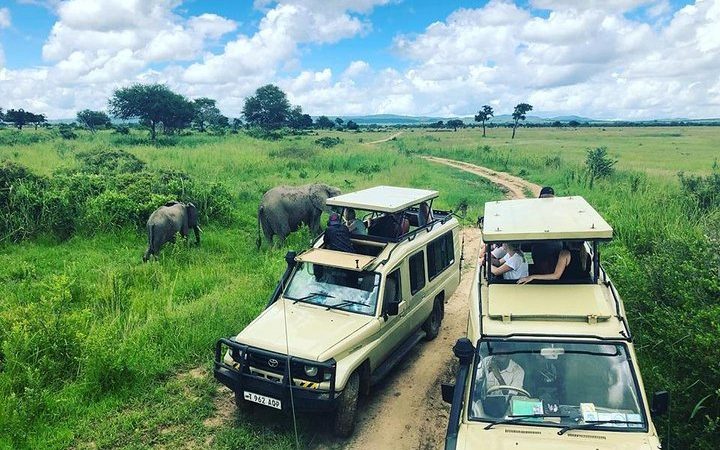
Mikumi comprises many habitats that create a conducive ecosystem to support wildlife. The southern part consists of gentle foothills dotted with evergreen trees. And there are vast savannahs dotted with miombo woodlands.
The park is an open savannah stretching to the foothills of Uluguru, Rubeho, and the Lumango mountain range, with a road crossing it. The northern part comprises lush forests of tamarinds, baobabs, palms, acacia-dotted savannas, and rock formations in the far north. This type of vegetation supports many animals; therefore, this part is home to many animals as compared to the south.
2. High concentration of wildlife.
Mikumi is home to many animals – big and small living inhabiting diverse habitats across the park. Though you won’t locate all the Big Five here, at least the four of them – lion, leopard, buffalo, and elephant – are present. The rhinos are absent. Since Mikumi borders Nyerere National Park, you can go there to watch these prehistoric animals.
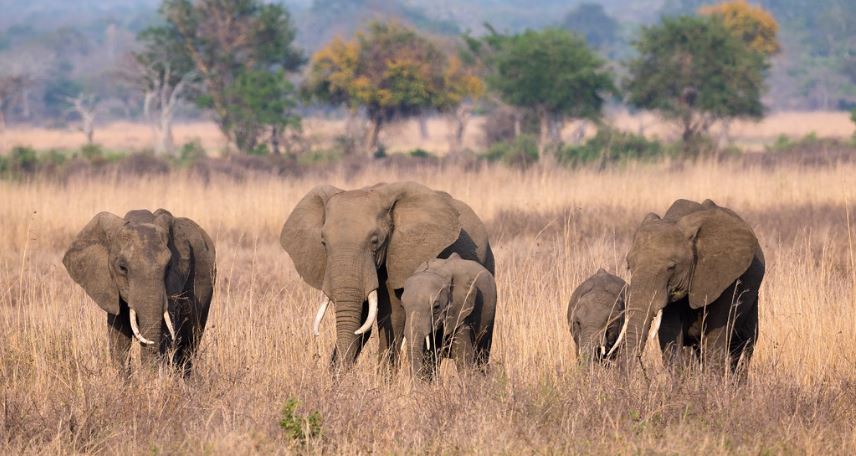
Here, elephants roam in big herds in the miombo woodlands, tearing down branches to feed their little ones. Lions, in large prides, command the Mkata floodplains, one of the wide, stretched savannahs in the country.
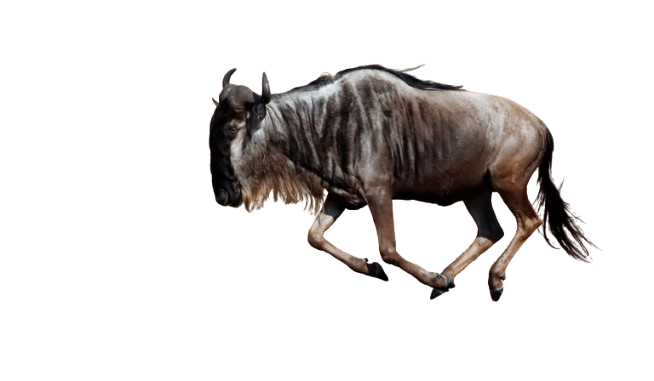
Lions coexist with grass-eaters like zebras, wildebeests, giraffes, and various antelope species. You can find even the rare animals like Lichtenstein’s hartebeest, blue wildebeest, African wild dog, and sable antelope. In the streams and their two artificial pools, large pods of hippos alongside crocodiles coexist with water birds. Other animals you can see include spotted hyenas, buffalo, leopards, and small mammals like mice and mongooses.
3. Spectacular birdlife.
Mikumi is a scenic park that birders should not overlook. About 400 bird species live in this wonderful park. You might spot rare species like Racquet-tailed roller, Pale-billed hornbill, Shelley’s sunbird, Miombo rock-thrush, Tabora cisticola, Arnot’s chat, broad-tailed paradise-whydah, Kurrichane thrush, and Dickinson’s kestrel.
4. Mikumi is proximal to Dar es Salaam.
Mikumi is about 3000 kilometers (186 miles) from Dar es Salaam – that’s 4 to 5 hours of driving. Such proximity to the business capital makes it ideal for short trips. Tired of the hustle and bustle of the city? Choose to spend your weekend in Mikumi to refresh your mind with spectacular views of wildlife, landscapes, and birds.
What to do in Mikumi National Park
There are plenty of things to do here. Here are our favorite activities:
Game drive.
A traditional game drive is the best way to explore Mikumi’s wildlife and spectacular landscapes. You just hop into a safari van and then drive into the vast Mkata floodplains. You will see a lot of plains game like zebra, wildebeest, lion, buffalo, and antelope. As you drive past the woodlands, heads of giraffes emerge, and you will probably encounter a large elephant herd. As the sun starts to sink, you may spot a leopard on the hunt (it’s a bit of luck).
Birdwatching.
Mikumi is one of the bucket-list destinations for birdwatchers and ornithologists. And for a reason, rare bird species are available here, including Uluguru violet-backed sunbird, yellow-collared lovebird, Kilombero weaver, and red-throated wryneck. The southern mountain range is well-known for hosting many endemic and endangered species.
Walking safaris.
Reconnect with nature by embarking on a rewarding walk in the forested slopes of Uluguru and Rubeho Mountains. Discover new trees and minute creatures like butterflies, which are abundant in the mountain region of Mikumi. A reflective guided walk in the wilderness will also make you forget the hustle and bustle of life.
The best time to visit Mikumi National Park is.
Mikumi offers unforgettable wildlife safaris during the dry season, from June to October. The grass is short, allowing one to watch wild animals from a distance. In addition, a few water sources remain, drawing animals close for even more straightforward wildlife watching. Since many guests always go there for short trips, it sometimes gets crowded, but not as much as most parks in the north.
How to get to Mikumi National Park
As we mentioned earlier, the best entry point to Mikumi is Dar es Salaam. So, you fly into the Julius Kambarage International Airport, then drive to Mikumi. Most guests combine Mikumi with Nyerere and Ruaha. Therefore, they fly from Dar es Salaam to any of these two parks, continue with their itinerary, then finish up with a drive-in safari to Mikumi, and finally back to Dar es Salaam for departure.
Start your plan today!
The ‘little Serengeti’ is an amazing destination for every safari-goer – whether it’s your first trip or it’s your second time being there. Our safari planners can assist you with planning. Please contact them for a free quote.