What Made Tanzania Win Africa’s Leading Destination 2025?
What Made Tanzania Win Africa’s Leading Destination 2025, Tanzania is renowned for its pristine beauty – whether you want to see striking landscapes, wildlife-rich parks, or exquisite palm-lined beaches. This country alone is home to the Serengeti, Kilimanjaro, and Ngorongoro Crater, which are indeed the most sought-after destinations in Africa. The country has collected 21 titles at the World Travel Awards 2025 ceremony held in its business capital, Dar es Salaam.
Attended by top players in the tourism and hospitality sector, these prestigious awards had no other option than to crown Tanzania as Africa’s Leading Destination 2025. Outperforming top performers like South Africa, Kenya, and Morocco was no easy feat, but the tourist attractions within the borders of this East African country had the final say. We’ve prepared this blog to highlight some of the fascinating attractions that gave this country such a historic win. Let’s explore.
Serengeti National Park
Looking for wildlife at its purest form? There you’ve found Serengeti National Park. Famous for constant wildlife encounters, Serengeti can satisfy the burning desire to trek the ever-moving migration or tick off the Big Five. And it’s for good reason, Serengeti won two titles: Africa’s Leading National Park and Africa’s Leading Big Five National Park 2025. All five animals are present, with rhinos being the rarest. But there are better odds of sighting them in the Moru Kopjes.
This sanctuary is also home to the biggest predator population on earth. The promising number of lions (of up to 3,000) it has makes every game drive the best way to encounter the ‘king of the jungle.’ Leopards and cheetahs roam majestically, snatch their favorite prey like gazelles and dik-diks, dragging them up sausage or acacia trees.
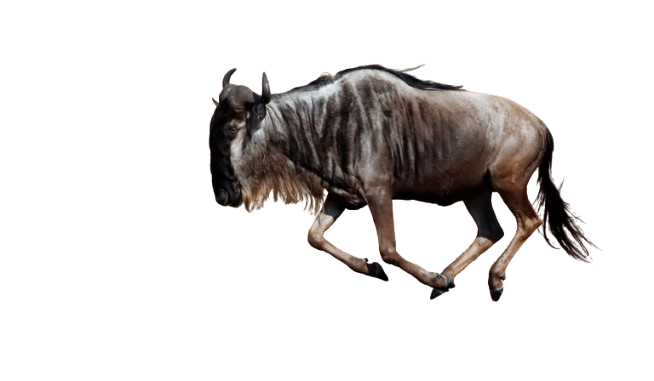
Serengeti rewards beyond just an ordinary safari because every drive is epic. You will encounter giraffes, impalas, topis, elands, buffalo, zebras, and wildebeest. Rare animals like African wild dogs (also painted dogs), oryx, and roan antelopes can be seen.
Nyerere National Park
If you want to substitute Serengeti with a quiet option, Nyerere is better. Though you won’t see wildebeest migration here, the serene forests and abundant wildlife will amaze you. And there’s a chance to see all the Big Five. Yes, lion, leopard, elephant, buffalo, and rhino live in Nyerere, with the rhino encounters being occasional (to lucky visitors).
Named as Africa’s Leading Most Scenic Park in the WTA 2025, Nyerere offers a scenic background sought after by many avid photographers. And it delivers unforgettable safari experiences beyond traditional game drives. For instance, you can explore the giant Rufiji River on a boat or sleep under the stars on a well-prepared, mosquito-proof fly tent near the riverbank.
Some animals are difficult to find in most northern parks, with wild dogs being one of them. There’s a promising population of these painted wolves. These canids work well in teams, especially during hunting. And this technique has made them the most successful predators, with success rates of up to 98%. Other rare species include blue wildebeest and sable antelope.
Mount Kilimanjaro
Another natural wonder in Tanzania is its snow-capped mountain rising higher up to 5,895 meters (19,341 ft). Climbing this world’s tallest freestanding mountain is no easy feat; it’s a milestone because you will navigate through five ecological zones, from the tropical rainforest zone through the moorland zone to the arctic zone.
Kilimanjaro is, of course, the easiest of the seven summits of the world. Even beginners can hike it with fewer struggles as long as they have a certain level of fitness. You don’t need special climbing skills like rope swings, just stamina and focus, then you’re on the African roof. This dormant volcano has seven routes (Marangu, Machame, Lemosho, Rongai, Umbwe, Shira, and Northern Circuit), each with certain difficult levels.
Ngorongoro Conservation Area.
This 8,288-square-kilometer conservation area borders the Serengeti to the southeast. It’s a place where wildlife and humans coexist: yes, the Maasai herdsmen have survived the wildest moments with their cattle in the bush. The conservation area won the Africa’s Leading Tourist Attraction 2025 award.
The Ngorongoro Crater, a masterpiece within the area, is indeed its major highlight. Famous for its vast expanse on the crater floor, this crater spans 264 square kilometers. But there’s a high concentration of animals of up to 25,000, including the most sought-after Big Five animals. It is easier to spot rhinos on the floor than it is in the Serengeti.
Kitulo National Park
Probably not famous, but this beautiful park is one of the best-kept secrets. It snatched the title of Africa’s Leading Honeymoon Destination 2025. As for every newlywed couple, flowers are remarkably important; this hidden gem is home to over 45 species of orchids and over 350 total species of vascular plants.
Additionally, the mountain range, covered with green montane forests, harbors primates, including the rare kipunji monkeys. You can also spot a few birds there, including blue swallow and Denham’s bustard, because over 350 species call it home.
And there’s more…
This is just a wrap: Tanzania has many destinations. The likes of Ruaha National Park, Zanzibar, Tarangire National Park, and Lake Manyara National Park are worth a trip. In addition, the famous Maasai tribe and fellow Nilotic groups, Hadzabe, Datoga, and Barbaig, are welcoming societies worth knowing.